Weimar, weiblich and the Rediscovery of Female Film Pioneers
The Backstory
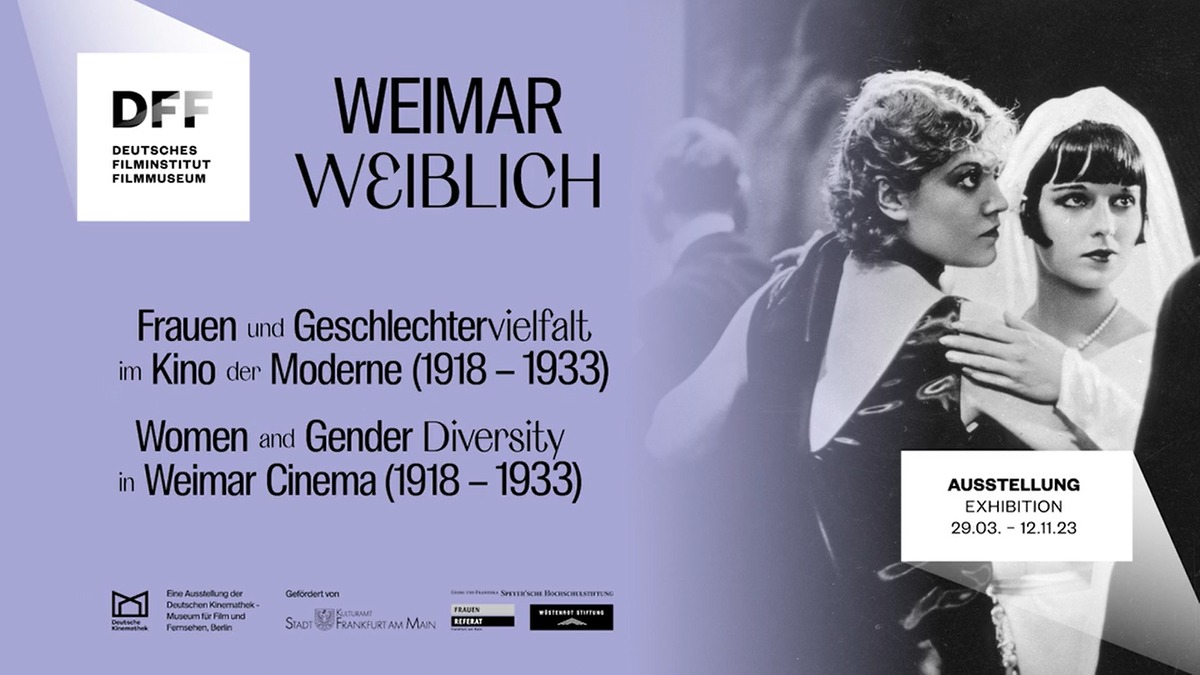
In 2023, the DFF – Deutsches Filminstitut/Filmmuseum – presented the highly successful Weimar weiblich exhibition in its facility in Frankfurt am Main. Its aim was to shine a light on women who worked across all areas of the burgeoning film industry – as directors, producers, screenwriters, costume designers and production designers. Though these women helped the industry flourish, they are now largely forgotten. The exhibition also explored how cinema of the Weimar period addressed gender issues, focusing on themes such as bodily autonomy, cross-dressing and homosexuality. Weimar weiblich thus offered a fresh perspective on German film history from 1918 to 1933.
The Bookstory
Flash forward to January 2026: Daria Berten (DFF), Annika Haupts (Stiftung Deutsche Kinemathek) and Anna Heizmann (Konrad Wolf Film University Babelsberg) present Weimar, weiblich: Filmpionierinnen des Kinos der Moderne (1918–1933)1 at the DFF. Their companion book to the Weimar weiblich exhibition includes 46 filmmaker biographies from Ola Alsen to Luise del Zopp, as well as eight essays by feminist historians and curators.
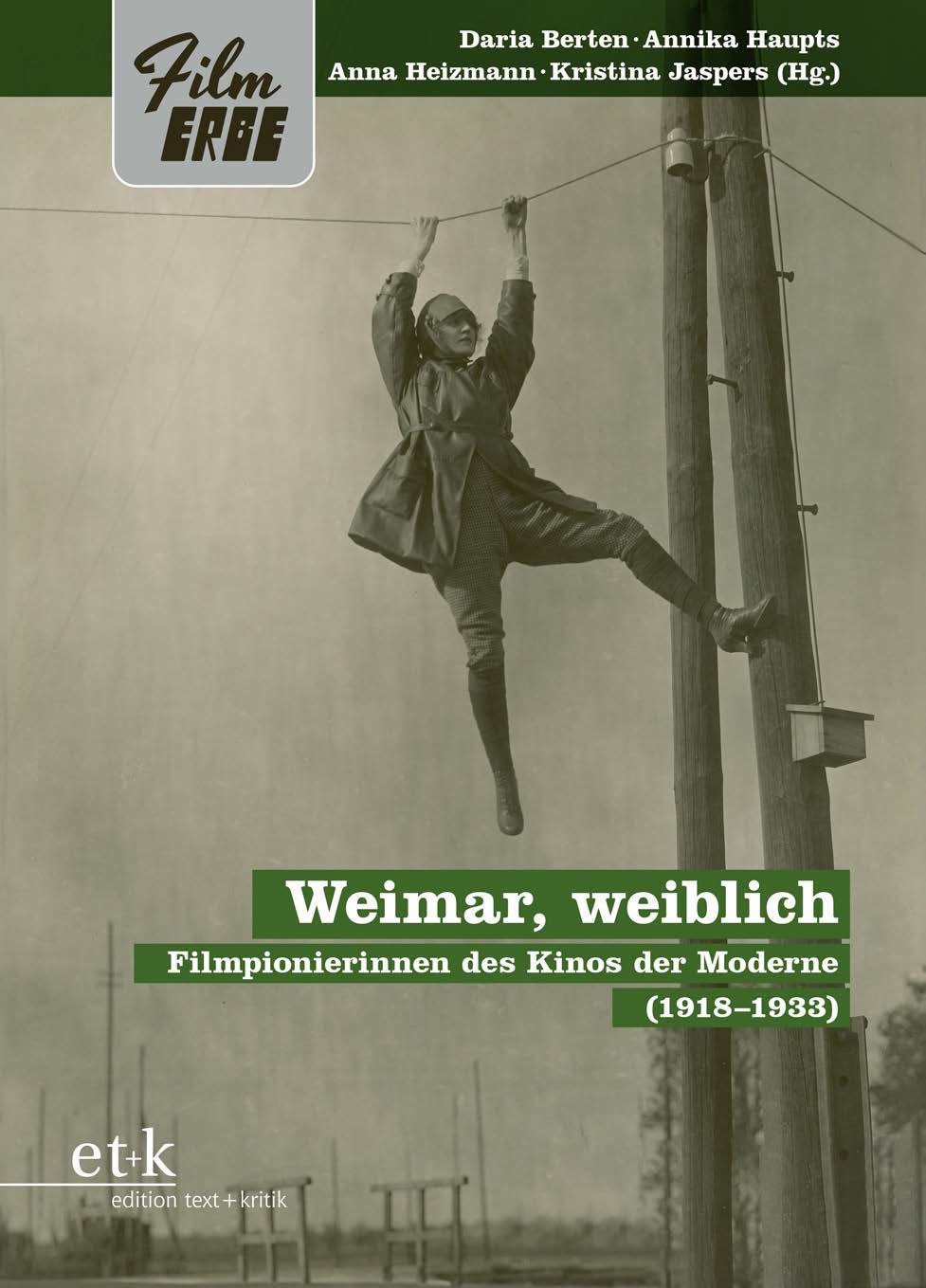
Cover image: Edith Posca as Detective Miss Madge Henway in Das Achtgroschenmädel. Jagd auf Schurken. Part 2 (1921, Wolfgang Neff). Screenplay: Jane Bess, Source: Deutsche Kinemathek – Photo Archive
The book’s dramatic introduction by editors Daria Berten, Annika Haupts, Anna Heizmann and Kristina Jaspers reads like a film scenario:
“Into the Klieg Lights” (“Ins Jupiterlicht”)
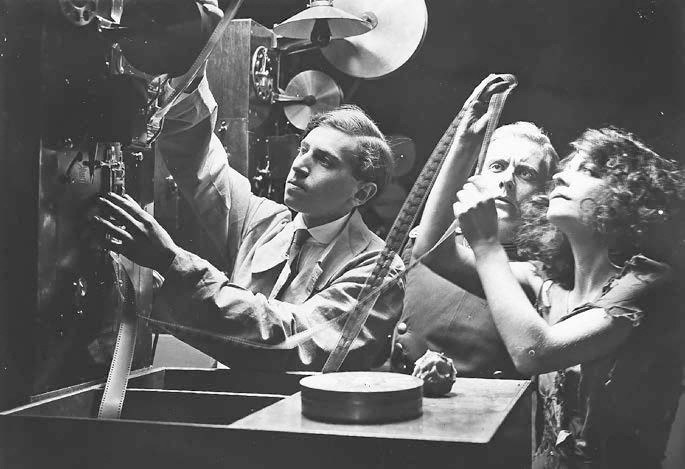
It’s a cold January day in Berlin in 1924. The temperature is eleven degrees below zero, and the ladies are wrapped in thick furs. At 4 p.m., a film premiere of Lupo Pick’s Sylvester is taking place at the Ufa Cinema on Kurfürstendamm. Edith Posca, who two years earlier had played one of the first female detectives in German cinema in Das Achtgroschenmädel (1921, Wolfgang Neff), can be seen in one of the leading roles. Seated in a box is Luise Heilborn-Körbitz, head dramaturge at Pick’s production company REX-Film, and an experienced screenwriter. To her regret, the screening is not a success; on the contrary, the drama drags in places, and the audience laughs at the wrong moments. Undaunted, she approaches the director and offers to quickly re-edit the film. He agrees, and she springs into action, going into the projectionist’s booth and starting to cut and splice … The freshly spliced reel is loaded immediately, and, to Heilborn-Körbitz’s delight, the second screening is received much more favorably. The accompanying music is also replaced, and the next day the press is full of praise for the director … An anecdote from the life of a screenwriter, and at the same time an example of determination, pragmatism and team spirit – qualities that characterized many of the pioneering women of Weimar cinema.
This volume is dedicated to them. It thus sheds light on a largely unknown chapter in German film history: women’s filmmaking behind the camera during the Weimar Republic. After the First World War, many women took advantage of the new career opportunities in the film industry. They worked as screenwriters, directors and producers, among other roles, but were usually not allowed to have their first names listed in the credits. With a pioneering spirit and a willingness to experiment, they explored this new medium. Yet this period of new beginnings did not last long. With the advent of the Nazi era, the careers of almost all women in the film industry came to an end. For various reasons, evidence of their work is difficult to identify today.
Name changes due to marriage or divorce, as well as the use of pseudonyms, generally make it difficult to identify individuals. Occupational bans and stories of flight and persecution during the Nazi era often led to careers being cut short, and certificates were lost. This makes the research that identifies documents, deciphers pseudonyms, and makes biographies and the context of their work accessible again (or for the first time) all the more significant.
In a 1928 radio program entitled “Im Schatten des Jupiterlichts,” critic and essayist Lucy von Jacobi highlighted women’s professions behind the camera in Germany and the USA. With this volume (Weimar, weiblich), we are, in a sense, building on that work. We aim to bring women and their diverse contributions to film during the Weimar Republic out of the shadows and into the klieg lights, making them visible to all. To this end, the three institutions – Konrad Wolf Film University Babelsberg, the Deutsche Kinemathek – Museum of Film and Television, and DFF – German Film Institute and Film Museum – have joined forces. The editors have drawn on several years of joint research on the subject2.
A treasure trove of information on female contributors to the early film industry, the book features illustrated biographies that will encourage readers to rediscover their forgotten work. Side by side with better-known names like Thea von Harbou, Leni Riefenstahl, Vicki Baum and Lotte Reiniger, we find Wera Clewe, a camerawoman, editor and technical draughtswoman who began working in Ufa’s animation department in 1920, and screenwriter-producer-actress Hella Moja, whose Hella Moja Film-Gesellschaft produced 15 films between 1918 and 1922, including work by directors Iwa Raffay and Urban Gad. Weimar, weiblich’s enjoyable expert essays touch on a number of relevant issues. Kristina Jaspers writes of female experimentation and the avant-garde; Nils Warnecke probes gender diversity and the importance of queer role models in the media; Philipp Stiasny traces the history of the reception of women’s film work in the Weimar Republic. The book’s “materials” section treats the reader to archival tidbits comprising everything from typewritten transcripts of interviews – including one with screenwriter Luise Heilborn-Körbitz on her work from 1911-1924 – to reproductions of program notes, excerpts from treatments and scripts, and crew photos. There are essays by entrepreneur Liddy Hegewald on her transition from theater owner to film producer and distributor in 1916, and by costume designer Aenne Willkomm on Metropolis fashions. As one would expect from a publication by leading film curator/historian/archivists, Weimar, weiblich is thoroughly researched and documented. It remains to be hoped that this valuable resource will soon be available in English.
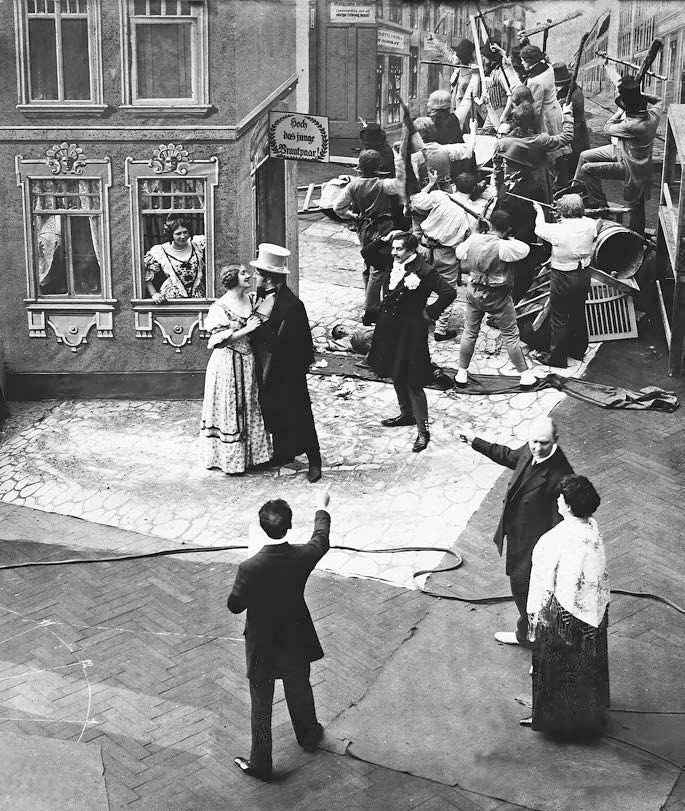
Production still: Addressatin verstorben (1911, Adolf Gärtner).
Scenario writer Luise del Zopp front right, in light-colored shawl
Here’s a 5-minute TV interview with Weimar, weiblich curators and authors Kristina Jaspers and Annika Haupts (in German).
This collaborative project would seem to be part of an increased effort in many places to rediscover women’s film work, and to rewrite film history in a way that does justice to gender equality. All signs point to the dawning of a new kind of film historiography that shines a spotlight on the contributions of women who have been ignored by or written out of official history. Thus archival work becomes an ethical task.
In her essay on WeimarCinema.org, Maggie Hennefeld writes that she is “inspired by the speculative turn in feminist media historiography. In response to the absences, silences, and missing links that haunt the archives of feminist media writ large, scholars have cultivated speculative approaches to cast off the shackles of empiricism…. Simply put, we can still write about films even if we can no longer see them.”
Fortunately, we still can see some of them, in places like the biannual Remake. Frankfurt Women’s Film Days. In their Weimar, weiblich essay, Remake founders Heide Schlüpmann and Karola Gramann recall the beginnings of increased interest in “women’s films” in the 1980s, and describe their efforts to make the work of neglected filmmakers available in cinemas once more. The result was Kinothek Asta Nielsen, Remake’s organizer and still the only archive and research institute for feminist and queer film in Europe.
Asta Nielsen in Die Filmprimadonna (1913, Urban Gad)
While previous writings on women in Weimar cinema have often dealt with women’s depiction in Weimar films or their experience of modernism and urbanization, they have not necessarily focused on women’s contribution to the film industry. Katharina von Ankum’s Women in the Metropolis: Gender and Modernity in Weimar Culture (University of California Press, 1997) brings together the work of scholars in many disciplines to show women as active participants in artistic, social, and political movements, tracing gendered discourses about new images of femininity. In Gender and the Uncanny in Films of the Weimar Republic (Wayne State University Press, 2014), Anjeana Hans examines how uncanny Weimar films engaged with and responded to changing gender norms and women’s emancipation.
Digital Rediscoveries
Perhaps ironically, a major contribution to the current interest in rediscovering makers of 100-year-old films has been digital collaboration among archives – and the public.
The Women Film Pioneers Project (WFPP) is a digital publication and resource that advances research on the hundreds of women who worked behind the scenes during the silent film era. It publishes original scholarship on women directors, producers, screenwriters, editors, and more. The website features short career profiles on single individuals, longer thematic peer-reviewed overview essays, and shorter multimedia posts by film scholars, film curators, archivists, and historians.
WFPP partner project Aesthetics of Access. Visualizing Research Data on Women in Film History (DAVIF) at the University of Marburg, Germany, has just launched an interactive website to explore the careers of female filmmakers in early film history using data from the Deutsches Filminstitut & Filmmuseum. Here you can search by country or profession, and are sent to a page with basic data about that person. Weimar filmmakers are linked to their entry on Filmportal.de, and their history is visualized in the form of an Alluvial Diagram and a Circular Dendogram – though it’s not clear how useful these data visualizations might be for film history researchers.
Women and Film History International (WFHI) is committed to the research, preservation, and exhibition of women’s global film history. One of WFHI’s most important activities is the organization of the Women and the Silent Screen conference (WSS), a biennial scholarly event that focuses on women’s diverse contributions to global film industries and cinema cultures prior to synchronous sound production. This event draws together researchers, historians, students, archivists, curators, and filmmakers from around the world.
Analogue Rediscoveries
An additional example of rediscovered interest in “forgotten” women filmmakers was evident in two programs that were part of an extensive event titled “Days of Exile,” held at various Frankfurt locations from August 20 to September 6, 2026. Alongside discussions on current exiles in modern-day Frankfurt, walking tours and musical performances, two programs dedicated to exiled Jewish women filmmakers Jane Bess and Ellen Richter were presented by the Deutsches Filminstitut & Filmmuseum.
The program description for “In Search of Traces: The Marginalised Cinematic Legacy of Jane Bess” points out that many Jewish women filmmakers had a significant influence on cinema during the Weimar Republic before they were forced out of their professions by the Nazis, driven into exile, or murdered. Using the example of screenwriter Jane Bess, curator Daria Berten and collection director Eva Hielscher outlined the current state of research and the archival situation, describing the major challenges that exist due to women’s continued lack of recognition in film history.
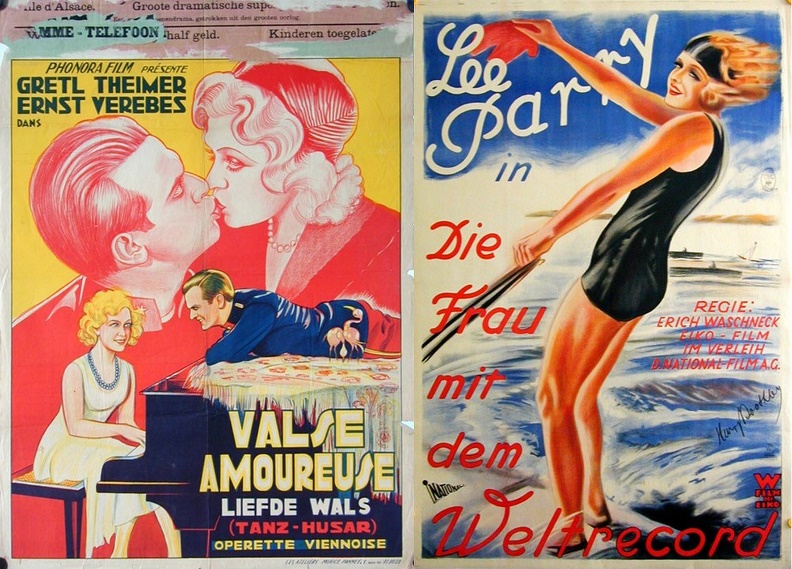
Graphic: Morice Panneels & Henry Boothby, source: DFF
“Ellen Richter – A Star of the Silent Film Era” included a screening of Moral (1928) to shine a spotlight on the work of this now largely forgotten actress-producer. Oliver Hanley, co-author of the monograph Ellen Richter. Die große Unbekannte des Weimarer Kinos (The Great Unknown of Weimar Cinema), provided an introduction.
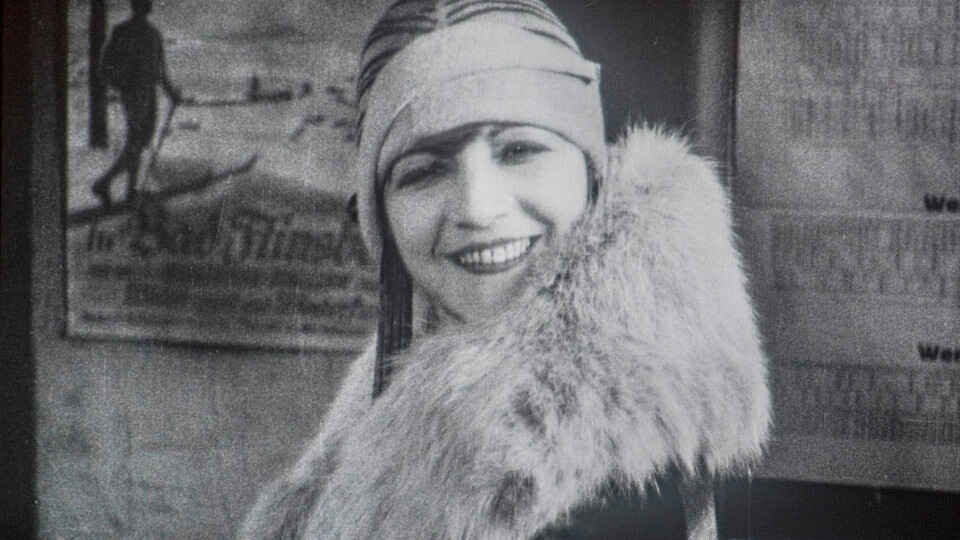
Ellen Richter. Photo: Willi Wolf, copyright DFF
The Road to Rediscovery
Finally, though its focus is largely on literature, the Munich-based Monacensia archive has a new initiative that may be seen as a blueprint for further action. Its #FemaleHeritage project aims to rediscover and safeguard the cultural heritage of women, queer communities, and individuals who have faced exile and migration, to create spaces for an open-knowledge culture, and to enhance digital accessibility.
About five years ago, Monacensia took stock of its “literary memory” to find ways to create relevant forms of literary and cultural mediation from the archive holdings for today’s audience, and to facilitate more layered storytelling. The analysis showed that gaps in the collective memory mirror public perception. The city’s memory had either overlooked women’s experiences or presented them filtered through the lens of male perspectives. The realities of people in queer communities, or those who experienced migration or exile, faced similar forms of erasure and dismissal. To address identified gaps while incorporating a variety of perspectives, the archive not only catalogued its collections, but also actively sought out the missing information. As it did, it invited various networks and target audiences to be part of the process.
The task of archives and museums is to collect, preserve, and communicate. One would think they are obliged to be objective. Still, institutions dedicated to preserving collective memory are never impartial. They are invariably influenced by the prevailing spirit of the times, which doesn’t speak to their objectivity. Deciding to start by focusing on rediscovering women, Monacensia’s curators introduced the community hashtag #FemaleHeritage. With the help of a group of allies in the German-speaking world, they began searching for traces of forgotten cultural workers.
Promotion of cultural rights, policies of care, and gender equality is also a focus of the World Organization of United Cities and Local Governments (UCLG). Their Mexico City bureau presents a yearly award to cities with cultural policies that have made significant efforts to link culture (heritage, diversity, creativity and transmission of knowledge) with democratic governance, citizen participation and sustainable development. In June 2026, the “UCLG – Mexico City – Culture 21 International Awards” jury presented the city of Munich with a special mention for the #FemaleHeritage project, noting that the initiative provides an important impetus for a more equitable culture of remembrance. As the pioneering women of Weimar cinema knew, the way forward is through determination, pragmatism, and team spirit.
Footnotes
1 Weimar, weiblich: Filmpionierinnen des Kinos der Moderne (Pioneering Women of Weimar Cinema), Film Erbe series vol. 7, edited by Chris Wahl, edition text + kritik im Richard Boorberg Verlag GmbH & Co KG, Munich 2025.
2 Translation by the author.