Paleokinematography and Weimar Cinema’s Lost Treasures: F. W. Murnau’s Der Knabe in Blau (1919)
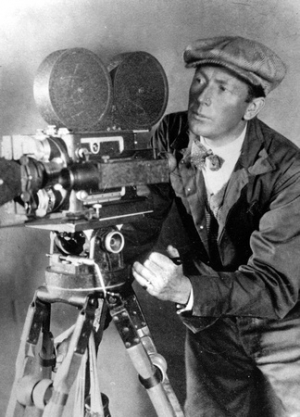
Figure 1 F. W. Murnau (filmportal.de/DFF)
If 1919 was a ‘Wendejahr’, pivotal and revolutionary in every sense for Germany, but also for the German film industry, so too was it monumental for the then thirty-year-old Friedrich Wilhelm Murnau (1888-1931). After a prewar career in theatre and wartime service in the German armed forces, Murnau quickly found his way into the still-youthful film industry of the new Republic and equally quickly contributed to the meteoric rise of German film in the years of the Weimar Republic. He is now regarded as one of the most influential directors in the history of world cinema with films such as Nosferatu (1922), Der letzte Mann (1924) and Sunrise (1927) widely considered to be founding examples of global cinema. Curiously, however, relatively little is known about Murnau’s start in the film industry, a situation only exacerbated by the fact that all six of Murnau’s first films, produced between 1919 and 1921 are essentially lost.2 Only with the release of Der Gang in die Nacht in 1921, do we have a complete example of Murnau’s ‘early’ work, less than a year before his first acclaimed masterpiece Nosferatu.
Although Murnau’s case is somewhat extreme, most directors who began their careers in the early years of the Weimar Republic have similar gaps in their filmographies, where these pioneering works are either incomplete or entirely missing. Film and cultural historians thus lack critical information about both the conditions under which these films emerged, and the nature of the productions themselves. This in turn skews the canon of Weimar film, since there is a natural tendency to want to focus on complete films, regardless of where they might fit into a director’s complete works. Focusing on Murnau’s debut Der Knabe in Blau, I here propose an approach to these lost films, which I now term ‘paleokinematography’1, that can help us better understand the creative innovation of early Weimar cinema and, here, Murnau’s extraordinarily precocious talent as a film director.
BERLIN IN 1919
F. W. Murnau is widely regarded as one of the true pioneers of early cinema and yet his early career in the film industry remains shrouded in mystery. Before World War I he had abandoned his university studies to embark on an acting career with the influential Max Reinhardt-led Deutsches Theater in Berlin, but with the outbreak of war in 1914 he volunteered for service in the German Imperial army. Haunted by the omnipresence of death in the trenches (particularly after the death of his friend and likely lover Hans Ehrenbaum-Degele in 1915), he transferred to the Imperial air force. After joining a front-line squadron in 1917, Murnau quickly discovered that service in this arm was equally perilous, but a routine patrol in December 1917 saw his aircraft stray over the border of neutral Switzerland. When he and his pilot made a forced landing on a football pitch in Basel, they were promptly interned by the authorities.3 Whether by accident or design, Murnau’s war was over: he took to his internment with gusto, initially returning to the stage, then taking on the role of director – materials held in the Deutsche Kinemathek in Berlin reveal details of internees’ theatrical productions directed by Murnau, which resulted in him winning a prize for the direction of the Swiss folktale Marignano in Lucerne in 1918. There followed attempts by Swiss friends to convince him to stay in Switzerland and pursue a career as a theatrical director. There are, however, no tangible indications that he was considering a switch to film except, tantalizingly, for a single-page film treatment written in Lucerne in November 1918,4 as well as a letter from fellow internee Kuno Müller who cryptically asks Murnau: “Fr[au] Bühlau has told me a little [but I still don’t know] whether you’re appearing as Hamlet or making films.”5 Years later Murnau himself hinted at possible collaboration with the German embassy, producing propaganda films of some kind, but no evidence exists today to support the notion. Quite evidently Murnau rejected this option of staying in Switzerland – as he prepared to return to Berlin in the first weeks of 1919, his publisher Anton Kippenberg wrote: “I send you my warmest greetings as you return to German soil,” warning that much had changed since Murnau went off to war, “I think it will be difficult and painful for you to find your feet again in this new Germany.”6 Soon after, Murnau confirmed his repatriation: “I am writing in haste to inform you that I have finally been released from internment and have arrived back in Berlin […] I will write again as soon as I have unpacked and have settled in a little.”7 We know that Murnau moved in with Hans’s now-widowed mother in 22 Douglasstraβe in Grunewald, where he stayed (even after Frau Ehrenbaum-Degele’s death) until he emigrated to America in 1926.
Berlin, indeed the whole of Germany, was now in turmoil but Kippenberg’s prediction proved unfounded. Despite the febrile conditions witnessed in Germany as the monarchy collapsed and the new Republic was called into existence, the still-young film industry expanded at an astonishing rate in 1919, providing many opportunities for those seeking to gain a foothold in filmmaking in the post-war era. Whatever the exact circumstances which led to Murnau’s chance, quite clearly he grasped it with both hands. His debut production, Der Knabe in Blau, was completed within ten months of Murnau’s return to Berlin.
And Murnau was not alone: 1919 saw the release of many productions by both established and novice directors. Ernst Lubitsch’s historical epics Madame Dubarry and the comedy Die Austernprinzessin cemented this great director’s appeal, and he would soon emigrate to Hollywood. Joe May’s multi-part Die Herrin der Welt was enjoying great commercial success, and Richard Oswald’s groundbreaking and controversial Anders als die Andern (starring Murnau’s great friend and collaborator Conrad Veidt) was pushing moral boundaries by questioning Germany’s Paragraph 175 laws against homosexuality. Like Murnau, Fritz Lang made his directorial debut in this year with Halbblut and the acclaimed Die Spinnen thriller series;8 and Robert Reinert was examining the trauma of the lost war in Nerven.
PALEOKINEMATOGRAPHY
But for every Madame Dubarry there are a dozen or more films made in 1919, which are now regarded as lost. The entire catalogue of director Octav von Klodnicki’s three 1919 productions (to name just one obscure example) have vanished,9 while Lang’s directorial debut Halbblut, as well as his second production Der Herr der Liebe, along with films he scripted for director Otto Rippert such as Totentanz (all released in 1919), are likewise considered lost today.10 Many directors from this period, whether ultimately successful or not, shot film which are now lost to modern scholarship, and we do our discipline a disservice if we simply ignore them when discussing these filmmakers’ careers.
Given all of the above, I wish to conduct a brief exercise in filmic reconstruction using an approach for which I have coined the term ‘paleokinematography’. In so doing I am not undertaking anything new as such – from the outset the likes of Lotte Eisner and Siegfried Kracauer have attempted to reconstruct plots of lost films from a mixture of viewing notes, publicity stills and the like. Some scholars have begun to advocate for speculative exercises with regard to films wholly or partly lost to us today – for just one example see Andréas-Benjamin Seyfert’s recent article “On the Status of Lost Films” published on this website. But like the paleontologists who specialize in reconstructed renderings of dinosaurs, based on often imperfect fossil remains (this subdiscipline is termed ‘paleontography’ or ‘paleoart’), I hope to offer something of a new approach to these lost films and thereby gain a broader view of the astonishing variety and breadth of Weimar’s film industry.
Why engage in this exercise? Recent scholarship has begun to recognise that we sell our discipline short if we ignore missing films - precisely because these far outnumber those which survive to the present. If we consider other academic disciplines we see how the principle of the ‘speculative turn’ has opened up new avenues of enquiry: in literary studies, for instance, Saidiya Hartman has boldly applied a methodology of ‘critical fabulation’ to lend voice to African-American slaves who were hitherto ignored by history.11 In her essay ‘Venus in Two Acts’ Hartman asks, “is it possible to exceed or negotiate the constitutive limits of the archive”? She stresses the potential but also acknowledges the limitations of her approach to giving some form of life to the slaves who were murdered en route to the UK, USA and elsewhere, filling in the gaps in archives which have typically preserved only the voices and testimonies of the slave traders: “By advancing a series of speculative arguments and exploiting the capacities of the subjunctive […], in fashioning a narrative, which is based upon archival research […], I intended both to tell an impossible story and to amplify the impossibility of its telling.” Thus Hartman embraces the gap-filling exercise in order to advance new perspectives in her field. Likewise, the subfields of paleoecology and paleoclimatology have gained much ground in recent years as scholars have cautiously introduced a greater element of speculation to their work.12
In film studies, archivists in particular now promote a more nuanced understanding of the value inherent in missing film.13 Kate Saccone, the curator of the Women Film Pioneers Project’s tenth anniversary exhibition in 2023 notes that “it is now widely accepted that only about 10 to 20 percent of global silent filmmaking actually survives” (146).14 Saccone offers some useful proposals for how to classify and handle missing films, while Allyson Nadia Field has been more strident in proposing real engagement with lost material, claiming that if we wish to “expand the canon of objects we study, we have to find ways to engage with nonextant works.”15 These two exemplars will serve here to demonstrate that a more concerted effort to address lost material is timely.
I am not talking here about the restoration of films where incomplete copies survive in various archives (as valuable as this work quite clearly is to us). The focus instead is on films where little or no footage is believed to have survived to the present (or at least none has been discovered). My approach is to build as complete a picture as possible of the film in question, even if (or precisely when) we have few or indeed no moving images to rely upon.16 To this we add a degree of speculation, cautiously and judiciously, in order to achieve the paleokinematographic reconstruction.
In the absence of extant film sequences, the sources of the ephemeral evidence required are many, ranging from studio-released publicity stills to film posters, from critics’ reviews to censorship reports, from trade newspapers to fan letters, in short any and all of the information which accompanies the filming, distribution and consumption of a commercial film. This process is by definition fraught with traps: film posters are notoriously difficult since they were often completed by artists who were provided little more than a few key words about the plot, long before filming had been completed so as to be ready for distribution to cinemas in good time for the film’s release. Critics’ reviews can also be sketchy, produced (most commonly) soon after a special press screening and based on some scribbled notes and diagrams made by the critic, in the dark, on a pad balanced on their knees.17 Each piece of evidence is nevertheless valuable if we intend to attempt a reconstruction of the film’s plot and even hope to determine its attributes in visual terms. The parallels with paleoart are warranted here, I believe: a fossilised vertebra here, a chipped tooth there, and one day we might dare to produce a first sketch of what our elusive animal might have looked like. According to Ilja Nieuwland, scholars in this dynamic field have begun to embrace the “known-unknown” where scientists “recognize that more than one possibility may be worthy of consideration” in order to further our understanding of a long-extinct species.18
Similar principles can, I believe, be applied to lost films. Furthermore, we can add to our reconstruction over time, in the same way that a paleoartist might decide to revise her painting once archaeologists find evidence that the creature was in fact feathered, so in the same way our paleokinematographic reconstruction remains a living thing, vibrant, changing. In film studies we have to recognise (dare I say hope) that this work may one day be made redundant if the original film is in fact discovered languishing in an archive in South America, Japan, or Eastern Europe, or even in somebody’s garden shed. But it is not entirely wasted since the paleokinematographic reconstruction can then aid in the restoration of the film since it is not uncommon for the material to be jumbled and confusing, needing this parafilmic information to determine which scene follows the other, which intertitle card belongs with which moment of action, and so on.19
With all this in mind I have chosen to apply this principle initially to Murnau’s missing debut film in order, I hope, to better understand the origins of this director’s career and the themes and choices which went into his directorial career.
DER KNABE IN BLAU
Before I offer a paleokinematographic interpretation of Murnau’s debut film I should like to raise a caveat: I do not intend to offer a reading of Murnau’s debut film in order to enhance our knowledge of Murnau’s biography in this period (although here, too, there is work yet to be done), nor do I wish to claim the film as evidence that Murnau’s genius shines through from the very earliest days of his career. The goal is merely to shine a brighter light on Murnau’s debut production in the hopes that we might gain new insights thereby.20
In her groundbreaking study of Murnau, Lotte Eisner lamented: “We know some of [Murnau’s early films] must have been magnificent… Let us hope that one day we shall find some of [them]” (1973: 141-2).21 Whilst it is an obvious source of regret that of the twelve films Murnau directed between 1919 and 1922 only five – Der Gang in die Nacht, Schloβ Vogelöd (both 1921), Der brennende Acker, Nosferatu, Phantom (all 1922) - have survived intact, a wealth of fragments, publicity stills, censors cards and film reviews relating to the missing productions are available, which allow us to piece together details of plot, casting and public reception, even if the films themselves remain beyond our reach.
One further conundrum surrounds the production of Der Knabe in Blau. Years after the director’s death, Murnau’s mother suggested that he had founded his own film production company with Conrad Veidt in 1919 in order to launch his directorial career – the Murnau-Veidt Filmgesellschaft.22 No record of such a company has been discovered to date, and although Murnau and Veidt did go on to work together, this venture with Veidt seems unlikely given that the future star of Das Cabinet des Dr. Caligari had himself founded a company with Gussy Holl at this time: the Gussy Holl-Conrad Veidt Filmgesellschaft, founded in 1920 for the actor’s own directorial debut Wahnsinn.23 Furthermore, press releases in the trade journals make it clear that Der Knabe in Blau was produced by the Ernst Hofmann-Filmgesellschaft, with Hofmann himself also playing the lead in the film. The existence of Hofmann’s production outfit does not preclude Murnau having his own company, but a company name including the surname Murnau, at least, does not appear in the extant Berlin Handelsregister for this period.24
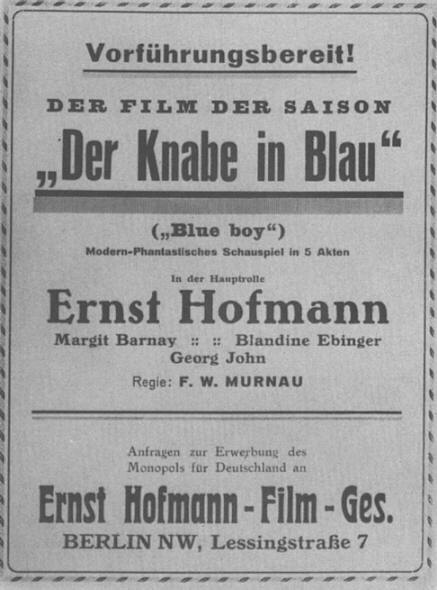
Figure 2 Poster for Der Knabe in Blau (www.lost-films.de)
From the very outset Murnau seems to have displayed a sure hand with his first production.25 Billed in one trade advertisement as a “modern-fantastical play in 5 acts”,26 and based on a screenplay by Edda Ottershausen, the plot was inspired by Thomas Gainsborough’s eighteenth-century portrait ‘The Blue Boy’. Helpfully, a fairly thorough summary of the plot was provided by Hofmann’s widow Hedda in Lotte Eisner’s 1964 study of Murnau. Naturally this is useful as a starting point and is worth quoting here in full:
Thomas von Weerth, last survivor of an old noble family, lives in poverty and retirement with an old servant in a romantic broken-down castle surrounded by water.
He often contemplates the portrait of one of his ancestors, with whom he feels a mysterious bond. Is he the re-incarnation of this young man in blue, who wears on his breast the famous ‘emerald of death’ that has always brought bad luck to his family? To avoid the curse, another of his forebears hid the jewel somewhere in the castle, and Thomas, haunted by the portrait, searches everywhere for the emerald, but in vain. One evening he falls asleep and the boy in blue steps out of the picture and leads him to the hiding place.
When he wakes up von Weerth finds the emerald in the place indicated to him in the dream and takes no notice when his old servant begs him to throw it away.
At this point some travelling players arrive at the castle and the young master falls in love with a beautiful gypsy girl who, with the aid of the leader of the troupe, gets him completely in her power. They strip him of everything: the emerald is stolen, the castle burns down, the portrait is destroyed. Thomas falls ill but is saved by the pure love of a pretty actress and awakens to life again thanks to her disinterested devotion.27
Filming is supposed to have commenced in the spring of 1919 – presumably soon after Murnau arrived in Berlin – with interior scenes shot in the Saturn studios in Berlin,28 while some other location filming took place around the capital. The Burg Vischering castle, near Lüdinghausen in Münsterland (in modern North Rhine-Westphalia) served as von Weerth’s familial home. With shooting completed by the summer,29 the film was readied for release, but the exact date of its premiere has not been determined. Given pre-release publicity and press reviews, it is possible that it was screened in late summer or autumn of 1919. An announcement in Der Film in July 1919, for example, states that “The first completed film of the Ernst Hofmann-Film-Gesellschaft Der Knabe in Blau, which has been under director F. W. Murnau with Ernst Hofmann in the title role, has been sold to the firm A. E. Gottschalt G.m.b.H.”30 But by the end of the summer trade journals are reporting that Murnau had begun filming his second feature, Satanas (also lost) which premiered in January 1920. No further references to Der Knabe in Blau appearing in cinemas have been discovered to date. In later years Murnau himself declared “I am not certain whether this film was ever actually released”.31
Very little of the film remains, with the Kinemathek holding just thirty-five original nitrate images in its archives, amounting to less than half a minute of total footage.32 Also extant is the original censorship card, dating from 7 April 1921,33 which lists all 122 intertitles used in the film. These are particularly helpful in recreating aspects of the plot: one refers to a written testament which outlines the curse of the emerald in the painting, warning “Thus, stranger, who seeks to own the stone after me, thou must wander and never rest until thou hast found the Blue Boy in his garb”. Another sheds light on Thomas’ infatuation with the gypsy girl “With costly gifts Thomas seeks to bind Maja to himself.” But others simply add to the confusion, and the full list fails to illuminate some key plot elements in any form.34 The intertitles also feature an art collector by the name of Perennius Bell who is desperate to own the portrait and possess the emerald himself, and who appears to act as the arch-manipulator behind Thomas’ downfall.
Beyond these fragments we have no further description of plot, and little further evidence can be gleaned to support the exact time of the film’s release. No press reviews have yet been located despite archival research in the German Film Institute’s archive at the Nationalbibliothek in Frankfurt, and elsewhere.
These difficulties notwithstanding, I believe what we do know about this film suggests that Der Knabe in Blau may be (tentatively) regarded as something of a protocol for all of Murnau’s later career. Historians Fred Gehler and Ullrich Kasten perhaps understandably emphasise the visual qualities of the plot: “Murnau’s interest in this story must surely lie in his affinity for its art-historical elements” (1990: 30), and they certainly have a point, given Murnau’s university studies in fine art and literature. But we should not downplay the film’s content even if no copy of the film exists today. From what we do know about the plot, it seems quite apparent that it is the melodramatic elements of the story which attracted Murnau to this, his directorial debut. At the heart of the plot is a lonely man who (slowly and painfully) learns the value of true love over earthly wealth. The Kinemathek images reveal a portrait of the eponymous boy, clearly based on Gainsborough’s original (but with the face altered to resemble Hofmann), as well as also several images which strongly suggest that Murnau has immediately found a style, which will feature in many of his later films. In one, Thomas is seen walking beneath a covered arcade alongside a body of water (whether this is a scene at the familial castle is not clear, but the intertitles mention a sanatorium, so this is presumably the latter location). The columns of the arcade fill the screen at an oblique angle, with glimpses of the lake behind, as Thomas walks towards the camera. Given his somewhat dishevelled appearance this may well represent the time after his downfall (the curse of the jewel once again proving to be true) when the castle has been burned down and Thomas has lost everything. We know that Thomas falls ill as a result of his misfortune, so the tightly-packed columns could speak of his entrapment and his desperation, before he is redeemed by the care and love of the young actress Lisa Sutroff. In any case, this image makes us think of similar scenes in Murnau’s later Schloβ Vogelöd (1921).
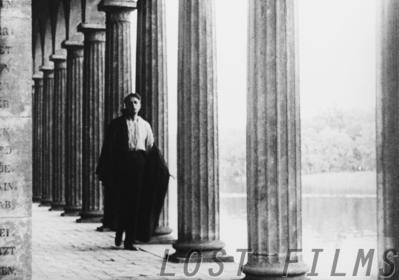
Figure 3 Der Knabe in Blau - Thomas in a colonnaded walkway (www.lost-films.de)
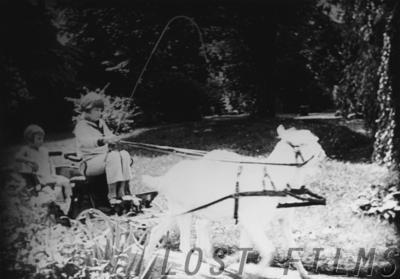
Figure 4 Der Knabe in Blau - a young boy drives a girl in a carriage (www.lost-films.de)
Other images suggest that some parts of the story are told in flashback, possibly outlining Thomas’ childhood. One still shows a young boy playing with a model of a fairground carousel, speaking with an older woman. This would certainly appear to be in the von Weerth castle, and it seems reasonable to assume therefore that the boy is Thomas himself. Another image then shows him driving a pony and cart around the castle grounds, with a young girl as passenger. In another, the same boy kneels before the girl in the pouring rain. We know that a key plot development in the film comes with the arrival of the troupe of entertainers, when Thomas becomes obsessed with the gypsy girl Maya. We know too that it is this obsession which leads to Thomas’ ruin, for although he finds the jewel and at least briefly believes that his fortunes are about to be restored, the girl’s leader plans to steal it, an action which leads to the destruction of the castle and Thomas’ total downfall. We might speculate that Thomas comes to reflect on a youthful love which has been lost. Certainly a relationship develops between Thomas and the actress Lisa, but at some stage Thomas must discover that Lisa was initially commissioned by Perennius Bell to befriend (or even seduce) the young nobleman, and they are subsequently estranged in the latter stages of the film until the final reconciliation. This too has echoes in subsequent Murnau films. We might think of Phantom (1922), where the foolish and haunted protagonist Lorenz Lubota ignores the faithful young Marie Starke for almost the whole film, and yet it is she who waits for him when he is released from prison.
There are other images which cannot yet be satisfactorily placed within the logic of the plot as we know it without further information: Thomas walking amongst some museum displays of exotic costumes and weapons, an unidentifiable woman kneeling in tears in front of the camera (a fascinating early example of the highly subjective point of view shot), and, tantalisingly, a number of stills which appear to show the boy of the painting, clearly alive, either standing in front of the castle, or riding a charger, and in one case giving a beautiful young woman a ride on the horse. It seems therefore likely that there was some kind of historical story running in parallel to the main plot, which shows the family in happier times before the curse of the jewel brought misery to the von Weerth line.
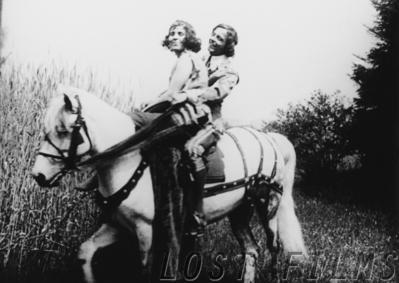
Figure 5 Der Knabe in Blau - the young nobleman with a girl riding together (www.lost-films.de)
Unless further details of the film’s plot can be uncovered, or even some longer scenes from the film itself, further speculation may be unwarranted, but what we do know at least points towards a limited release of a complete film at some point in the autumn or winter of 1919/1920. We can suggest with a high degree of certainty that Der Knabe in Blau showed promise in terms of Murnau’s potential as a director, and that the film might have enjoyed some modest commercial success, because we know Murnau is quickly offered further opportunities to direct new productions, even before the press begin to publish more effusive praise about the new director. At the very least the film is therefore of interest as a kind of apprenticeship piece, granting Murnau his first experience of the role of director and quickly helping him to learn the ropes of this young and rapidly developing entertainment medium. The many gaps in our knowledge of the film’s plot, let alone the absence of any moving sequences, only serves to arouse our interest and encourage further digging…
By engaging in this paleokinematographic exercise we are at least able to establish certain tenets, which will hold us in good stead: here we see the origins of a film career which, after a tentative start, develops into a highly influential career on both sides of the Atlantic. We also learn enough to assert with some confidence that here Murnau establishes certain concepts and themes to which he will return time and again throughout his career. The motif of fidelity through adversity, of a man who rejects but then rediscovers the value of true and faithful love becomes a template for many Murnau storylines, as does the hint of the supernatural seen here. Indeed, in his last German film, Faust (1926) Murnau emphasises how the protagonist is only redeemed when he rejects Mephistopheles’ wiles and embraces death with the innocent Gretchen. Gehler and Kasten summarize the impact of these lost films, noting just how accomplished they appear to be given how early in Murnau’s career they all appear:
Relevant for the time, and given our inability to ascertain all the facts, two things become clear: Murnau’s leaning towards psychological studies, stories about madness and mania, about erotic complications (‘amour fou’ floats through all these subjects) but also his apparent care over the décor of these films, the quite noticeable subtlety of the photography with their effects of light and shadow.35
Gehler and Kasten rightly emphasise Murnau’s precocious talent and identify his academic and other interests, but their summary underlines how much work is yet to be done if we are to build a complete understanding of Murnau’s launch into filmmaking in 1919 and 1920.
CONCLUSIONS
In the fragments (or fossilised remains) of these first films, we see tantalizing glimpses into Murnau’s early career: his trademark obsession with themes of the supernatural, the revelatory moment, lovers tormented by inner turmoil and external threats; we also see his equally marked use of exterior and interior locations to represent this turmoil and his use of a “painterly eye.”
Even with its missing status, a paleokinematographic approach to Der Knabe in Blau tells us a great deal about the earliest days of Weimar’s film industry and about the origins of Murnau’s career. From a pre-war career on stage, to wartime trauma and internment, we see this directorial novice (in filmic terms at least) seize his opportunity with relish, directing a film which seems remarkable for the confidence Murnau displays here in his thematic and visual first steps and which quite evidently taught Murnau a great deal about how to tell stories in this still young medium. Murnau’s body of work (whether extant or reconstructed) can reveal that he was a filmmaker of great vision and empathy. The frenetic pace of the rapidly-evolving film industry in this period, at a time of huge social upheaval, meant that Murnau was able to return to Berlin, quickly pick up his old contacts and friendship circle and (even if we still do not know exactly how) grasp the opportunity to dive into the industry. Murnau’s films directly or indirectly influenced countless directors and spawned multiple imitations and homages over the years, surely the best indication of greatness.36 As Charlie Chaplin declared at Murnau’s funeral “He was one of the best men Germany ever sent to Hollywood”37 while German director Wim Wenders once gushed: “Murnau was simply lightyears ahead of his time”.38 By applying the principles of paleokinematography to the earliest films he produced, we can begin to fill in a critical gap in our knowledge of his work and thus come to appreciate this great filmmaker more than ever.
Footnotes
1 This neologism might of course have been spelled with the more traditional palæo- prefix but I have decided against this as the modern paleo- seemed more appropriate to the field of film and cultural studies in the context of the Weimar Republic.
2 Minor fragments of some stills survive, but typically amounting to barely a few seconds in these cases.
3 See Martin Stohler, ‘Vor 100 Jahren gelandet: Zwei Deutsche auf der Allschwiler Fussballmatte’ in TagesWoche, 2 December 2014. The article includes an image of the cover of Mars magazine (December 1917) which shows Swiss officials posing in front of Murnau’s aircraft.
4 The treatment, entitled ‘Teufelsmädel: ein Film’, is reproduced in Hans Helmut Prinzler (ed.), F. W. Murnau: Ein Melancholiker des Films (Berlin: Stiftung Deutsche Kinemathek & Bertz Verlag, 2003), p. 243.
5 Letter written in Lucerne, 20 November 1919. Held in the Deutsche Kinemathek, 4.3-02/17-2 MÜLLER, KUNO
6 Kippenberg, of the Insel Verlag, worked closely with Murnau preparing a posthumous volume of Hans Ehrenbaum-Degele’s poems; letter from 24 February 1919 held in the archive of the Deutsche Kinemathek.
7 The Kinemathek archive holds a wealth of materials relating to Murnau’s career, albeit mostly correspondence Murnau himself retained. There is, regrettably, far less material written by Murnau himself.
8 As well as his directorial efforts, Lang continued to write screenplays – the scripts of the 1919 productions Totentanz and Pest in Florenz were both directed by Otto Rippert.
9 As listed on the Early German Cinema Database (curated by the University of Cologne). There is a discrepancy here too in that the Film Portal lists the Gräber film as a 1918 release and includes another title, Aus dem diluvialen Pompeji in the director’s filmography for 1919.
10 Although scholars have largely focused on Lang’s extant work to date, first attempts to reconstruct the plots of early missing films are proving fruitful. See e.g. Molly Harrabin, Rethinking Gender and Sexuality in Weimar Cinema (1918-1933), (unpublished PhD thesis, University of Warwick, 2025).
11 See Saidiya Hartman, ‘Venus in Two Acts’ in Small Axe 26 (June 2008), p. 11. I am grateful to Chris O’Rourke at the University of Warwick for first bringing my attention to this article.
12 See, for example, Rhodes W. Fairbridge, ‘History of Paleoclimatology’, in Vivien Gornitz (ed) Encyclopedia of Paleoclimatology and Ancient Environments (New York: Springer, 2009), pp. 414-28.
13 I should state at this point that I am not looking here at films where some footage is missing, and is one day unearthed, such as the near-complete restoration of Fritz Lang’s Metropolis in 2010.
14 Kate Saccone, ‘“Wrath, Witches and Wondrous Women” A Curated Program of Lost Films’, Feminist Media Histories 10 (2-3), 145-58, p. 146.
15 Allyson Nadia Field, ‘Making the Absent Present: Writing About Nonextant Media’ in Writing About Screen Media ed. Lisa Patti, (London: Routledge, 2019), pp. 92-3, here quoted in Saccone, p. 147.
16 A prime example of this kind of work can be seen in Alain Kerzoncuf and Charles Barr’s study Hitchcock Lost and Found: The Forgotten Films (Lexington: U.P. Kentucky, 2015) e.g. the reconstruction of a key sequence in The Prude’s Fall (dir. Graham Cutts, 1925) based solely on 9 surviving stills, see pp.62-9.
17 See “Rereading Kracauer”, Leonardo Quaresima’s introduction to the revised edition of From Caligari to Hitler, (Princeton: Princeton University Press, 2004), pp. xv-l.
18 Ilja Nieuwland, ‘Paleoart comes into its own’, Science 10 July 2020, pp. 148-9 https://www.science.org/doi/10.1126/science.abd3642
19 As Elif Rongen-Kaynakçi has pointed out with regard to the restoration of the previously lost Anglo-Dutch production Blood Money (dir. Fred Goodwins, 1921) in 2005 “Even having access to almost all the scenes of the film, the story still did not make a lot of sense”, ‘Restoring Blood Money’ in Nicholas Baer et al (eds), Unwatchable, (New Brunswick, Camden, Newark N.J., London: Rutgers University Press, 2019), p. 234. Rongen-Kaynakçi is curator of the film archive at EYE Filmmuseum Amsterdam and is a passionate supporter of the restoration of any and all elements of missing films.
20 To paraphrase my colleague Elisabeth Herrmann, who playfully asked as I prepared this article “Which dinosaur do you want to reconstruct first?”
21 Eisner’s wish has been in part fulfilled, with the discovery of the missing material for Der brennende Acker (released 1922) to enable a near-complete restoration.
22 In Lotte Eisner, Murnau (London: Secker & Warburg, 1973), p. 23.
23 Gussy Holl was married to Veidt at the time and starred alongside Veidt in Wahnsinn. She also worked with Murnau, starring in his 1921 film Sehnsucht.
24 At least for the period 1919-1921, see Berliner Handels-Register 1921, published by Ullstein Verlag and preserved digitally by the Landesbibliothek Berlin at https://digital.zlb.de/viewer/image/34457317_1921/5/LOG_0003/ [accessed 27 July 2026]. Veidt’s directorial debut, Wahnsinn, produced by the Gussy Holl-Conrad Veidt Filmgesellschaft, premiered on 15 October 1919 and it was not until Murnau’s second film, Satanas (which premiered in January 1920) that he and Veidt worked together for the first time. Satanas was produced by Viktoria Film.
25 Sometimes known as Der Todessmaragd.
26 See Lost Films website https://www.lost-films.eu/documents/show/id/2800 [accessed 24 July 2025].
27 In Eisner (1973), pp. 122-3.
28 Große Frankfurter Straße 106, Berlin.
29 Prinzler suggests “spring to June 1919” (2003: 268).
30 In Der Film No. 28 (12 July 1919), p. 37. Held in the film archive of the Deutsches Filminstitut & Filmmuseum, Nationalbibliothek Frankfurt.
31 Quoted in Hermann Treuner (ed.), Filmkünstler: Wir über uns selbst (Berlin: Sibyllen-Verlag, 1928), p. 346. See https://archive.org/details/filmknstlerwirb1928film_1/page/n345/mode/2up.
32 See https://www.lost-films.eu/films/show/id/30. Even the longest fragment held in Berlin amounts to just eleven frames of 35mm stock: assuming a projection speed of 16 fps this gives us less than a second of action. With a final length of 1,560m (as noted in the censor’s report), the film would have been approx. 80 mins long. See Kevin Brownlow. “What was the right speed?”, Sight and Sound (Summer 1980), pp. 164-7.
33 Censorship was approved retrospectively because the film originally appeared in the censor-free period of the Republic. Once the Reichslichtspielgesetz was passed in May 1920, all films which had appeared before this date were required to pass retrospective approval. In the case of Der Knabe in Blau, we know that this occurred on 1 April 1921, with a limitation of ‘Jugendverbot’ i.e. not fit for viewing by minors. See Prinzler (2003), p. 96.
34 See Prinzler (2003), pp. 96-8.
35 Gehler und Kasten (1990), p. 31
36 Hitchcock was particularly influenced by Murnau’s films, having observed him at work in 1920s Berlin (see Sidney Gottlieb and Christopher Brookhouse (eds) Framing Hitchcock: Selected Essays from the Hitchcock Annual (Detroit: Wayne State UP, 2002), pp. 42-43). In a similar vein, Nosferatu could be said to have launched Hollywood’s obsession with the Dracula legend, not to mention remakes of Murnau’s classic by Werner Herzog in 1979 or Robert Eggers in 2024. And it would be remiss here to overlook E. Elias Merhige’s archly comedic 2000 homage to Nosferatu, Shadow of the Vampire.
37 Prinzler (2003), p.7.
38 Prinzler (2003) p. 8.
About the Author
IAN ROBERTS is Associate Professor and Head of German at the University of Warwick, UK. He has published widely on various aspects of Weimar cinema, and is author of the 2008 study German Expressionist Cinema: The World of Light and Shadow (Wallflower Press). He is the founder of the Weimar 100 project, which was launched in 2019 to raise the profile of Weimar cinema with the British public by marking the centenary of both canonical and less well-known Weimar films in annual public lectures and screenings. He is currently working on a monograph of F. W. Murnau’s life and career.